Rurality and the Weight of the Unspoken: A Silent Tension in "Light as Feathers" and "The Day Has Gone"
12/23/2025
12/09/2025
Spanish cinema of the early 2000s offered a sharp reflection of a society in transition. Among the most striking films from this period are Icíar Bollaín’s Mataharis (2007) and Alberto Rodríguez’s 7 Virgins (2005). Though they occupy very different worlds — one intimate and female-driven, the other masculine and set on the margins — both reveal the socioeconomic and generational fractures running through a changing Spain.
Released only a few years apart, Mataharis and 7 Virgins continue the tradition of Spanish social realism exemplified by filmmakers like Fernando León de Aranoa (Mondays in the Sun, 2002). These films expose the tensions, instability and contradictions of post-Franco Spain while examining how globalisation and inequality shape everyday life.
In Mataharis, Bollaín turns her attention to the private sphere. Ada, Carmen and Inés — three private investigators in Madrid — juggle their work with their personal struggles. Their cases become reflections of their own secrets and reveal the fragility of the relationships around them. At the same time, they expose how difficult it remains for women to move freely in a society still marked by deeply rooted patriarchy.
Curious? Watch Mataharis here for free.

7 Virgins examines another side of social precarity – the experience of marginalised youth. Tano, a teenager in a detention centre, is granted a rare 48-hour leave. Over this brief window of freedom, Rodríguez sketches the search for purpose and identity felt by a generation trapped by its circumstances. The film turns Tano’s short escape into a metaphor for a social reality with few exits.
Curious? Watch 7 Virgins here for free.
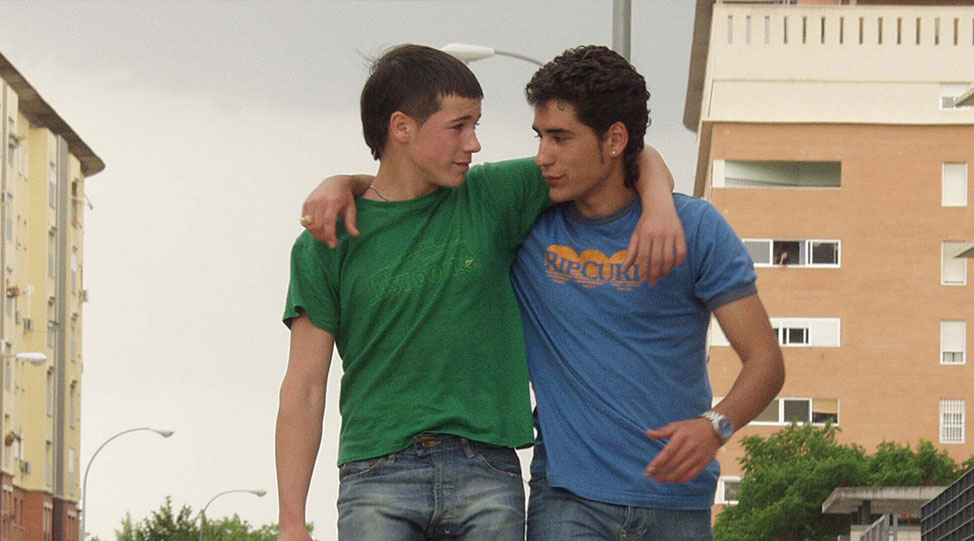
The themes explored in Spanish social cinema resonate across contemporary European filmmaking. Susana Nobre’s Cidade Rabat (2023), a Portuguese realist drama, extends the examination of precarity and marginalised lives.
The next masterpiece? It’s up to you to decide! Watch Cidade Rabat here and give the film a chance to shine.

Like 7 Virgins, its characters move between exclusion and survival, offering a universal portrait of social tension in today’s Europe. Sara Gutiérrez’s The Night She Moves adds another layer to this generational lens. The film follows young people searching for direction and identity in an urban Spanish landscape. It speaks naturally to 7 Virgins through its portrayal of disoriented youth, while also echoing Mataharis in its focus on individuals struggling to find their place in modern society.
The next masterpiece? It’s up to you to decide! Watch The Night She Moves here and give the film a chance to shine.

Taken together — the observant women of Mataharis, the marginalised boys of 7 Virgins, the precarious lives of Cidade Rabat and the wandering youth of The Night She Moves — these films form a coherent portrait of contemporary Europe. They reveal the hidden side of modernity, one marked by solitude, disillusion and instability.
Yet Spanish and European social cinema offer more than critique. They provide tools for empathy and understanding. By giving space to women, adolescents and people living on the margins, these four films create complementary reflections of a society in flux — and of a Europe confronting the social and generational challenges of the 21st century.

12/23/2025

12/23/2025

12/22/2025

12/19/2025